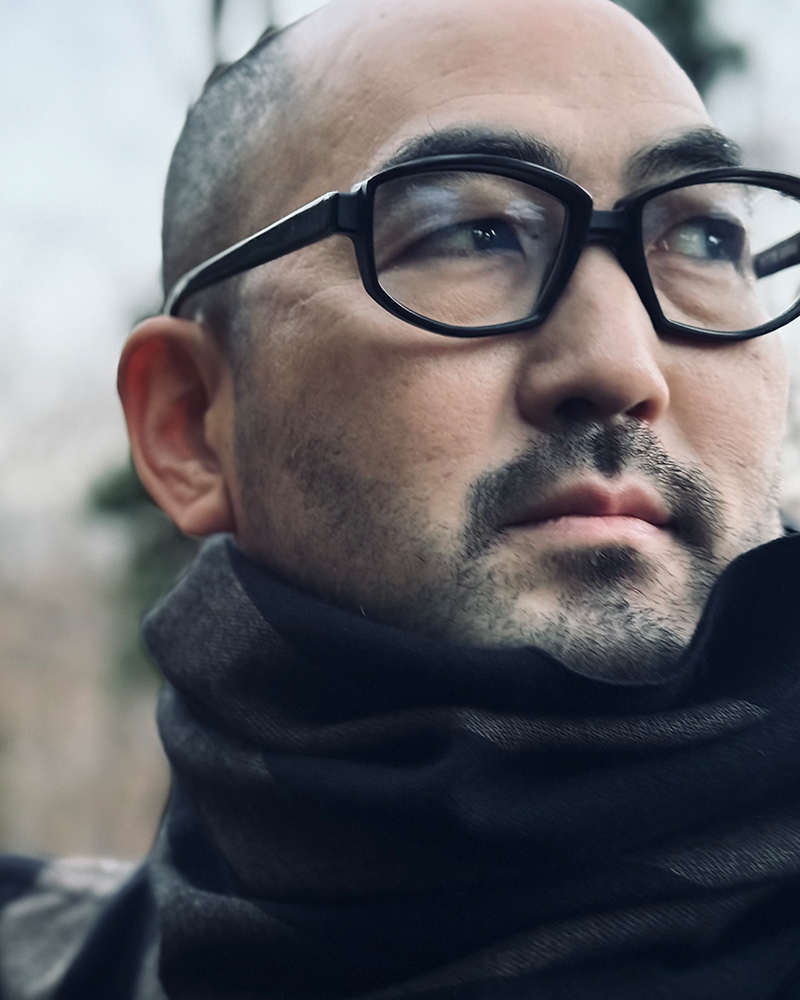
Composer and instrumentalist Kaoru Watanabe’s work is rooted in traditional Japanese performing arts and infused with experimental and improvisational elements. His signature skill of merging the music, literature, and aesthetic philosophies of Japan with disparate styles and media has made him a highly sought-after collaborator, working with such iconic artists as Wes Anderson, Mikhail Baryshnikov, Laurie Anderson, Jason Moran, and Japanese National Living Treasure Bando Tamasaburo.
The son of two St. Louis Symphony Orchestra musicians, Watanabe studied jazz at the Manhattan School of Music before moving to Sado, a remote island in the Sea of Japan. He undertook a rigorous two-year apprenticeship with the groundbreaking Japanese taiko performing arts ensemble Kodo, where he trained in traditional Japanese folk dancing, singing, drumming, woodworking, tea ceremony, rice farming, Noh, and Kyogen. Watanabe then became the first American to join the ensemble as a performing member, serving as an ambassador of Japanese music on the world’s greatest stages and as artistic director of their annual music festival, leading collaborations with luminaries such as Zakir Hussain, Giovanni Hidalgo, and Tamangoh.
After a decade in Japan, Watanabe returned to New York to pursue a solo career, collaborating with top artists of their respective genres, such as Andre 3000, Simone Leigh, Rhiannon Giddens, the Sydney Symphony, and the Silkroad Ensemble, and many others, all while championing the essence of Japanese flutes and percussion. In 2024, Watanabe launched Bloodlines Interwoven, a multifaceted commissioning project, festival, and ensemble celebrating heritage, immigration, and diaspora through music, cuisine, and storytelling.